


| A QUICK SUMMARY: What Is Influencer Marketing? Influencer marketing is a collaboration between a brand and a social media creator who has the trust of a defined audience, used to promote a product, service, or message in an authentic, native format. India’s influencer marketing industry is projected to touch roughly ₹3,375 crore by 2026, growing at a CAGR of around 18-20%, according to EY and other industry estimates. At echoVME, we’ve been designing and executing influencer campaigns since 2011, and we run a dedicated influencer marketing vertical called BuzzFame, which has delivered 300+ campaigns across nano, micro, macro, and celebrity tiers. |
Table of Contents
Introduction
At echoVME Digital, I’ve built and run digital marketing campaigns out of Chennai since 2011. In that time, I’ve watched influencer marketing grow from an experimental add-on that brands squeezed out of their PR budgets into one of the most accountable, ROI-driven channels in the marketing mix.
I didn’t just watch this shift from the sidelines; I built a dedicated influencer marketing vertical, BuzzFame and I’ve run 300+ influencer campaigns for brands across food, fashion, skincare, D2C, and more, working with everyone from nano creators to celebrities.
This guide is my attempt to put everything I’ve learned about influencer marketing, what it actually is, how it works, and what separates a campaign that drives revenue from one that just drives vanity metrics into one place. I’ve written it the way I’d explain it to a client sitting across the table from me.
What Is Influencer Marketing?
Influencer marketing is a form of marketing in which a brand partners with a social media creator, someone who has built credibility and an engaged following in a specific niche to promote a product, service, or idea to that creator’s audience.
Unlike traditional advertising, the message is delivered in the creator’s own voice, style, and content format, which is why audiences tend to receive it as a recommendation rather than an advertisement.
In my experience running these campaigns for over a decade, the core value of influencer marketing isn’t reach; it’s borrowed trust. A creator has already done the hard work of earning their audience’s attention and confidence. When a brand partners with the right creator, it inherits a slice of that trust, which is something a traditional display ad simply cannot buy.
Why Influencer Marketing Matters Right Now?
India’s influencer marketing industry has moved well beyond the experimental phase. Industry estimates from EY and Big Bang Social project the sector to reach approximately ₹3,375 crore by 2026, expanding at a compound annual growth rate of around 18% from 2022.
Roughly half of all mobile screen time in India is now spent on social platforms, and industry surveys suggest that close to three out of every four brand strategies now build influencer marketing into their communication plans.
I’ve seen this shift first-hand across our own client roster. A decade ago, influencer marketing was a line item brands experimented with once a quarter. Today, it’s a channel my clients budget for the same way they budget for performance ads with clear targets, defined creator tiers, and monthly reporting.
Types of Influencer Marketing
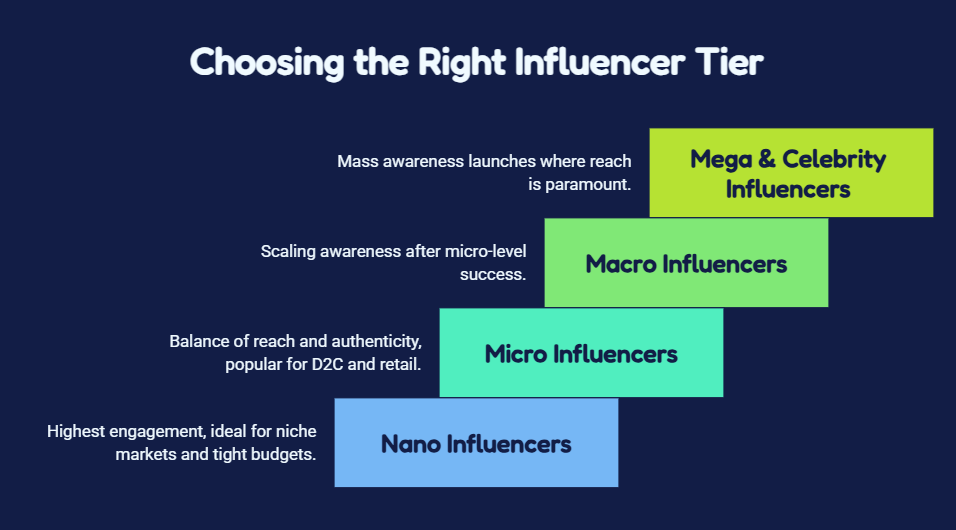
Not every campaign needs a celebrity, and not every celebrity campaign works. I typically map creators into four tiers, each suited to a different objective:
- Nano influencers (1,000-10,000 followers): the highest engagement rates of any tier, ideal for niche, high-trust categories and tight budgets.
- Micro influencers (10,000-100,000 followers): a strong balance of reach and authenticity, our most-used tier for D2C and retail brands.
- Macro influencers (100,000-1 million followers): useful for scaling awareness once a brand has proof of concept at the micro level.
- Mega and celebrity influencers (1 million+ followers, including celebrities): best suited to mass awareness launches where reach matters more than niche relevance.
Beyond follower count, campaigns also vary by content format sponsored posts and Reels, unboxings and honest reviews, brand takeovers, long-term ambassadorships, affiliate and performance-linked collaborations, and co-created product lines. I usually recommend a mix rather than a single format, because different formats serve different stages of the buying journey.
Influencer Marketing Strategies I Use at BuzzFame
Every campaign we run at BuzzFame, starts the same way not with a creator list, but with a business objective. Here’s the framework my team follows:
- Define the objective first. Awareness, engagement, and conversions each call for a different creator mix and content format. We define this before we look at a single creator profile.
- Match the creator to the audience, not the brand to the creator. We look past follower count to engagement rate, audience overlap with the brand’s target demographic, past brand collaborations, and content quality. A creator with 20,000 highly relevant followers will often outperform one with 200,000 loosely engaged ones.
- Brief the message, don’t script the creator. We give creators a clear brief on messaging, disclosure, and mandatory elements, but we deliberately leave room for the creator’s own voice and creative instinct. Over-scripted content is the fastest way to kill authenticity and audiences can tell.
- Build in disclosure and compliance. All influencer content we manage carries the required sponsorship disclosures in line with ASCI (Advertising Standards Council of India) guidelines. This protects both the brand and the creator and builds long-term audience trust.
- Measure what actually matters. We track reach and impressions, but we weight engagement rate, click-through rate, and, wherever trackable, conversions and cost per acquisition far more heavily. A campaign that doesn’t tie back to a business number isn’t one we’d call successful.
- Think in relationships, not one-off posts. Our best-performing client relationships use creators repeatedly over quarters rather than once. Familiarity compounds an audience that sees a creator genuinely use a product multiple times trusts that recommendation more than a single sponsored post.
Best Practices for Influencer Marketing
- Prioritise relevance over reach. A single high-follower influencer will rarely outperform a well-chosen bench of micro and nano creators for engagement and cost efficiency.
- Let creators say no to a bad fit. Audiences are quick to spot inauthentic partnerships; give creators room to genuinely like the product.
- Run small pilots before scaling spend. test formats, hooks, and creators before committing a full budget to any single campaign.
- Treat creators as long-term partners, not vendors. a strong campaign brief, a fair and timely payment process, and clear expectations lead to better content and repeat collaborations.
- Go beyond vanity metrics in reporting. track engagement quality, sentiment, and downstream conversions, not just likes and views.
- Stay compliant. every sponsored post should carry visible disclosure, in line with ASCI and platform guidelines.
Common Mistakes Brands Make
- Chasing follower count alone and ignoring audience quality and engagement rate.
- Handing creators a rigid, ad-style script instead of a creative brief.
- Running one-off campaigns with no plan for repeat collaboration.
- Skipping performance tracking beyond likes and comments.
- Ignoring mandatory sponsorship disclosure requirements.
How We at BuzzFame Approach Influencer Marketing
I built BuzzFame as a dedicated influencer marketing division within echoVME because I saw brands treating influencer marketing as an add-on to their social media calendars rather than recognising it as a strategic channel in its own right.
Through BuzzFame, my team and I have planned and executed 300+ influencer campaigns for brands across food, fashion, skincare, and D2C categories. We work across the entire creator spectrum, from nano influencers to celebrities, helping brands connect with the right audiences through meaningful collaborations.
My approach to influencer marketing follows the same principle that has guided echoVME since I founded the agency in Chennai in 2011: strategy first, disciplined execution, and measurable business outcomes. Today, echoVME Digital has grown into a team of 150+ professionals and has served 300+ brands across India, offering services spanning social media management, performance marketing, SEO, and influencer marketing under one roof.
My experience in digital marketing spans over 18 years. I started my career as an SEO executive and gradually built echoVME into one of India’s recognised full-service digital marketing agencies. That journey taught me that effective marketing is never just about visibility. It’s about understanding the audience, choosing the right channels, and connecting every campaign to a larger business objective.
I also founded Digital Scholar, an agency-style digital marketing training institute with campuses in Chennai & Mumbai. At Digital Scholar, I ensure that the influencer marketing strategies we teach are grounded in the practical experience of running campaigns for real clients through BuzzFame. If you want to learn digital marketing for free register and get the first lesson right away!
Every framework I share in this guide comes from strategies my team and I have applied to actual client campaigns and budgets, refined through execution, and evaluated against real-world results, not simply theory borrowed from a textbook.
Conclusion
Influencer marketing is no longer about chasing the biggest names or collecting the highest view counts. It is about finding creators who genuinely connect with the audience you want to reach, giving them the freedom to communicate in their own voice, and measuring whether that attention translates into meaningful business results.
The brands that see long-term value are the ones that approach influencer marketing with a clear objective, thoughtful creator selection, compliant execution, and a plan to build relationships beyond a single post.
At echoVME, through our dedicated influencer marketing division BuzzFame, I help brands turn creator collaborations into campaigns that build trust, drive action, and contribute to real growth. If you are ready to move beyond vanity metrics, my team is ready to help.
Frequently Asked Questions
1. What is influencer marketing in simple terms?
Influencer marketing is when a brand partners with a social media creator to promote a product or service to that creator’s audience, using the creator’s own voice and content style rather than a traditional advertisement.
2. How is influencer marketing different from celebrity endorsement?
Celebrity endorsement relies on fame and mass reach, while influencer marketing relies on niche trust and audience relevance. Influencers, especially micro and nano creators, often have smaller but more engaged, topic-specific followings.
3. Which influencer tier gives the best ROI?
Micro and nano influencers typically deliver the strongest engagement rates and cost efficiency, making them ideal for most brand budgets, while macro and celebrity tiers work better for pure awareness goals.
4. How do brands measure influencer marketing success?
Beyond likes and views, brands should track engagement rate, click-through rate, audience sentiment, and, where possible, conversions or cost per acquisition tied to the campaign.
5. Is influencer marketing disclosure mandatory in India?
Yes. As per ASCI (Advertising Standards Council of India) guidelines, all sponsored influencer content must carry a clear, visible disclosure such as “#Ad” or “#Sponsored”.
6. How much does an influencer marketing campaign cost?
Costs vary widely by creator tier, platform, and deliverables nano and micro creators may charge a few thousand rupees per post, while macro and celebrity influencers can command lakhs. Budget should follow objective, not the other way around.
7. Which platform works best for influencer marketing in India?
Instagram remains the dominant platform for influencer marketing in India, followed by YouTube for long-form reviews and explainers, with each suited to different stages of the buyer journey.
8. Should influencer content be scripted?
No. Brands should brief creators on key messages, disclosure, and mandatory elements, but let the creator use their own voice and format over-scripted content tends to underperform because audiences can sense inauthenticity.
9. Can small businesses afford influencer marketing?
Yes. Nano and micro influencer collaborations are accessible to small budgets and often outperform larger campaigns on engagement, making influencer marketing viable even for early-stage or local businesses.
10. How does echoVME run influencer marketing campaigns?
Through our BuzzFame division, we define objectives first, match creators to audience relevance rather than follower count, brief rather than script, ensure ASCI-compliant disclosure, and measure performance against business outcomes.
