



Table of Contents
Introduction
A brand founder asked me something last month that I get asked almost every week. Should I be putting my energy into Reels or Stories? I have been running a digital marketing agency since 2011, and I still get this question from clients as big as the ones echoVME Digital works with and from students who just joined Digital Scholar.
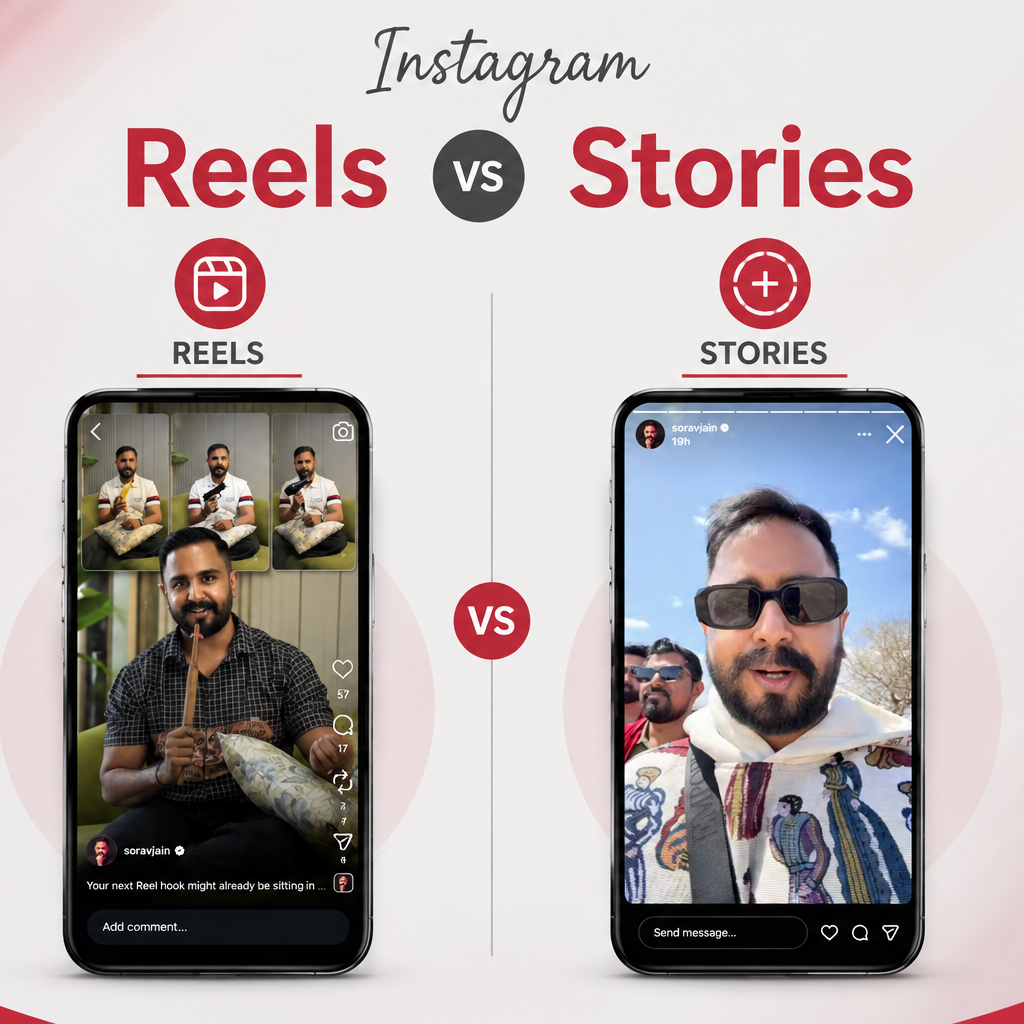
So I decided to write this blog and settle the Instagram Reels vs Stories debate the way I actually think about it, not the way most articles present it. Understanding Instagram Reels vs Stories helps you choose the right content format for your marketing goals.
Here is the short version before we go deep. Reels and Stories are not competing for the same job. They are two different tools in the same toolbox, and the moment you understand what each one is built for, the whole confusion disappears.
Why This Question Keeps Coming Up
I think the confusion comes from the fact that both formats are vertical, both are video-friendly, and both live inside the same app. On the surface level, they look similar but if you have run enough campaigns, and I have run thousands of them across the 300+ brands echoVME has worked with, you start to see how differently they behave once you press publish.
A Reel and a Story are built on completely different logic. One is designed to travel far beyond your existing audience. The other is designed to strengthen the relationship with the audience you already have. Once that clicks, the Instagram Reels vs Stories question stops being confusing and starts being strategic.
What a Reel Is Actually Built to Do
A Reel is Instagram’s discovery engine. When you post one, the platform is not just showing it to your followers. It is testing it with a small sample of people, watching how long they stay, whether they rewatch it, whether they share it, and then deciding how far to push it based on that behaviour.
This is why Reels can travel to people who have never heard of your brand, while Stories almost never do that. Our team at echoVME Digital has seen small accounts with a few thousand followers get Reels in front of hundreds of thousands of people, purely because the content held attention. Follower count barely matters here. What matters is retention in the first few seconds and whether people watch it more than once.
A Reel also does not disappear. Unlike a Story, it stays on your profile, on the Reels tab, and in the algorithm’s rotation for days or even weeks. I have seen reels from our BuzzFame creator network continue to pull in views a full month after posting, simply because the algorithm kept recirculating them to new pockets of interested users.
What a Story Is Actually Built to Do
A Story does the opposite job, and that is exactly why it is still valuable. It is not trying to find new people. It is trying to keep the people who already follow you close, engaged, and reminded that you exist. Stories vanish after 24 hours unless you save them into Highlights, and that short shelf life is the whole point. It creates urgency and a sense of real time connection.
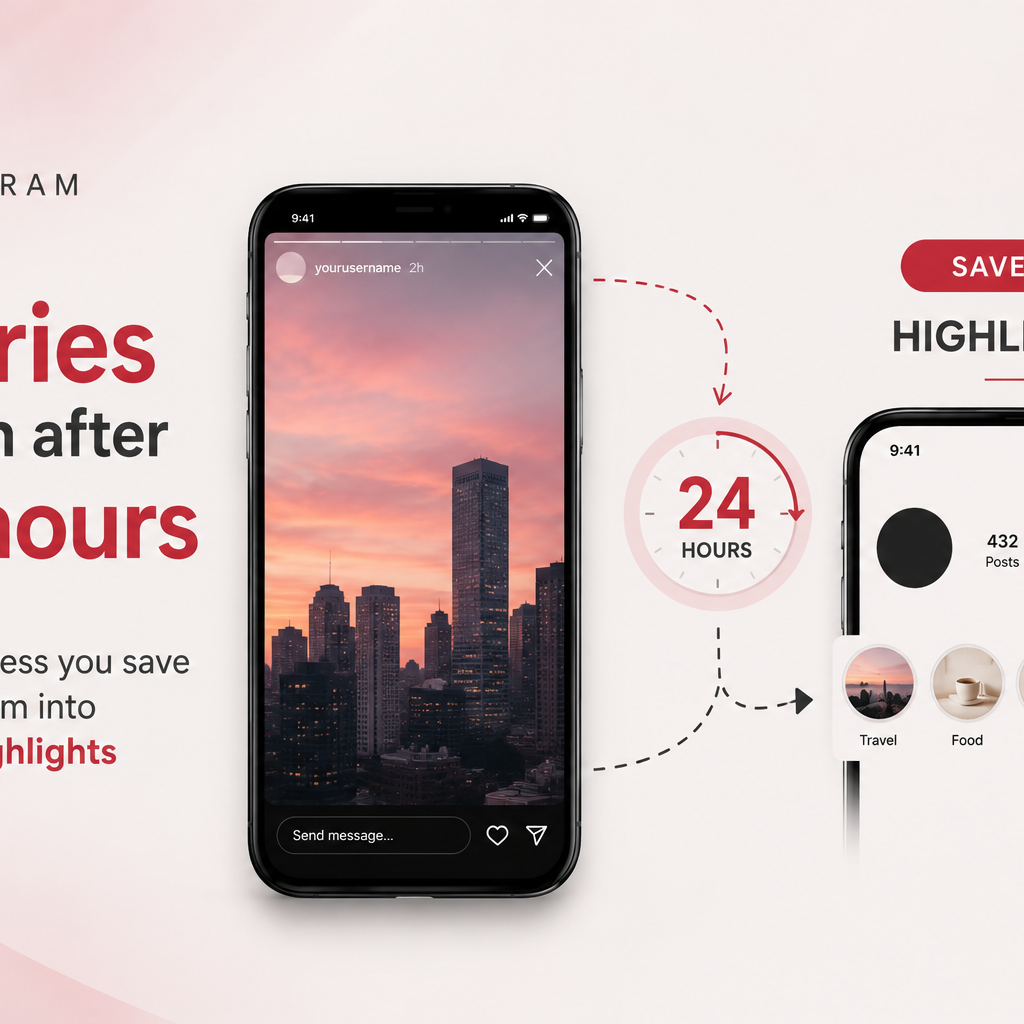
The Stories algorithm mostly shows your Story to people who already follow you and who have engaged with your content or messaged you before. It does not push you to strangers the way Reels does. So if your goal is reach and discovery, Stories will not get you there. If your goal is nurturing a relationship with an audience that already trusts you, Stories is one of the best tools on the app.
This is where a lot of brands go wrong. They expect Stories to grow their following, and then they get disappointed when the numbers barely move. Stories were never meant to do that job in the first place.
The Real Difference That Matters, Discovery vs Retention
If I had to boil down Instagram Reels vs Stories into one sentence, I would say Reels are for discovery and Stories are for retention. Reels bring in new eyes. Stories keep the eyes you already have coming back. The key to Instagram Reels vs Stories is knowing when to prioritise audience discovery and when to focus on building stronger relationships with existing followers.
A useful way to think about it is a funnel. Reels sit at the top, pulling in strangers who might become followers. Stories sit further down, keeping those followers warm, informed, and connected to your day to day activity. When brands use both correctly, one feeds the other. A viral Reel brings someone to your profile, and a well built Highlight in your Stories is often what convinces that person to actually hit follow or make a purchase.
How the Algorithm Treats Them Differently
I know a lot of readers of this blog are marketers who care about the mechanics, so let me get specific. The Reels algorithm in 2026 leans heavily on watch time, rewatches, shares, and completion rate. It genuinely does not care much about your relationship history with the viewer. It cares about whether the content itself is strong enough to hold attention.
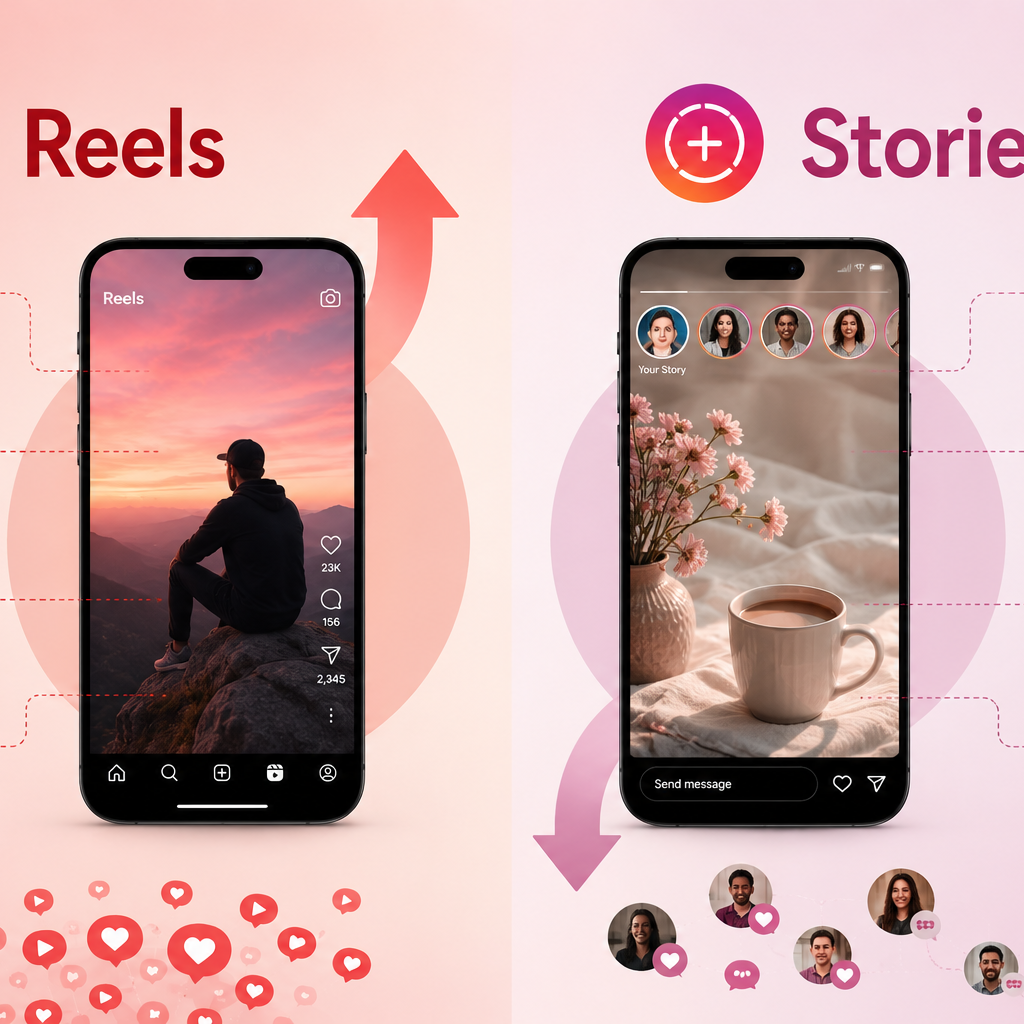
The Stories algorithm works almost the opposite way. It leans on your relationship history. Whose stories you have viewed before, who you have messaged, whose posts you comment on regularly. That is why your Story is far more likely to be seen by your actual community rather than by a stranger scrolling Explore.
Both formats reward genuine engagement now, not vanity metrics. A quick tap through with no interaction does very little for you. A reply to your Story or a share of your Reel does a lot more. I remind every batch at Digital Scholar of this because so many people still chase views and likes when saves, shares, and replies are the signals actually driving distribution today.
When I Tell Clients to Prioritise Reels
There are situations where I clearly push a client towards investing more in Reels.
- You are a new account or a new brand trying to build an audience from scratch
- You want to enter a niche or a trend and get discovered by people outside your existing followers
- You have a genuinely strong hook or story that works well in a fast paced, entertaining format
- You are launching a product and want maximum visibility in a short window
When BuzzFame runs influencer campaigns for D2C or FMCG brands, Reels are almost always the lead format for exactly this reason. They are the format most likely to introduce a brand to someone who has never bought from them before.
When I Tell Clients to Prioritise Stories
On the other side, there are moments where Stories do a job that Reels simply cannot do as well.
- You want to share a quick update, a flash sale, or a time sensitive announcement
- You want to run a poll, a quiz, or a question sticker to understand what your audience actually wants
- You are nurturing an existing community and want to feel personal rather than produced
- You want to drive direct traffic through a link sticker for something happening right now
For service based businesses and personal brands, and I include myself here, Stories are often where real trust gets built. My own Stories tend to be behind the scenes moments, quick opinions, and casual updates. That informal tone is exactly what makes Stories feel different from a polished Reel, and audiences respond to that honesty.
A Mistake I See Brands Make Constantly
The biggest mistake is treating one format like a lesser version of the other. I have seen brands take a Reel, crop it slightly, and dump it into Stories, then wonder why engagement feels flat. I have also seen brands do the reverse, stretching a casual Story style clip into a Reel and being confused when it does not get any reach.
Each format has its own visual language and its own pacing. A Reel usually needs a strong hook in the first couple of seconds because it is competing for attention from strangers. A Story does not need that same hook because the person already chose to tap into it. Respecting that difference, instead of recycling the same asset everywhere, is what separates accounts that grow from accounts that stay flat.
How I Structure My Own Weekly Content Mix
I get asked this a lot at Digital Scholar workshops, so let me share it plainly. In a typical week, I aim for two to four Reels focused on genuinely useful or entertaining content that could work even for someone who has never followed me. Alongside that, I post Stories almost daily, sometimes multiple times a day, covering behind the scenes moments, quick opinions on industry news, polls, and updates about talks or client wins.
The Reels are doing the heavy lifting for discovery. The Stories are doing the heavy lifting for connection. Together they build both reach and loyalty, which is exactly what a healthy Instagram presence needs. Neither format alone gets you the full picture, and that is the core lesson I want this blog to leave you with.
Which One Should You Actually Focus On
If you are just starting out and nobody knows your brand yet, lean into Reels first. You need discovery before you need retention. Once you start building an audience, bring Stories into the mix consistently so the people who found you through a Reel actually stick around and feel connected to you.
When comparing Instagram Reels vs Stories, consider your current audience size, reach goals, and engagement priorities before deciding where to invest your effort.
If you already have a loyal audience but your reach has plateaued, that is usually a sign you have been overusing Stories and underusing Reels. Reach comes from content that travels, and only Reels are built to travel that far on this platform right now.
A Final Thought From My Own Experience
After close to two decades in this industry, the one thing I keep coming back to is that there is no universal winner in the Instagram Reels vs Stories debate. It genuinely depends on what stage your brand is at and what result you actually need this month. Chasing reach with Stories will frustrate you. Chasing intimacy with Reels alone will leave your audience feeling like they only know the polished version of you.
Use Reels to be discovered. Use Stories to be remembered. Do both consistently, and the growth tends to take care of itself. That has been true for echoVME, it has been true for Digital Scholar, and it will most likely be true for your brand too.
Frequently Asked Questions
1. What is the main difference between Instagram Reels and Stories?
Reels are built for discovery and can reach people who do not follow you, based on watch time and shares. Stories are built for retention, shown mostly to people who already follow and engage with you.
2. Do Stories help grow my follower count?
Not directly. Stories mainly reach your existing audience since the algorithm relies on relationship history. If growing followers is your goal, Reels are far more effective for reaching new people.
3. How long do Reels stay visible compared to Stories?
Stories disappear after 24 hours unless saved to Highlights. Reels can stay in circulation for days or even weeks, as the algorithm keeps recommending them to new audiences over time.
4. Should small businesses focus more on Reels or Stories?
New or small accounts should lean towards Reels first since they need discovery more than retention. Once an audience exists, adding consistent Stories helps build loyalty and trust over time.
5. Why did my Reel get more reach than my Story?
Reels are ranked mainly on watch time, rewatches, and shares, regardless of your relationship with the viewer. Stories depend heavily on your existing engagement history, which naturally limits their reach.
6. Can I just repost my Reel as a Story?
You can, but it should not be your main strategy. Reels and Stories work best with content built for their own pacing and purpose, rather than one format simply recycled into the other.
7. What kind of content works best on Stories?
Time sensitive updates, polls, quizzes, behind the scenes moments, and quick opinions work well. Stories reward informal, personal content that feels current rather than heavily polished.
8. How often should I post Reels versus Stories?
A useful starting point is two to four well made Reels a week, alongside daily or near daily Stories. Reels drive reach, while frequent Stories keep your existing audience engaged.
9. Do Stories help with sales and conversions?
Yes, especially through link stickers for time sensitive offers. Since Stories reach an audience that already trusts you, they often convert better than colder audiences reached through Reels.
10. Is one format more important than the other?
Neither is more important, they serve different goals. Reels bring in new audiences and Stories retain them. A healthy Instagram strategy needs both used consistently, not one instead of the other.
