


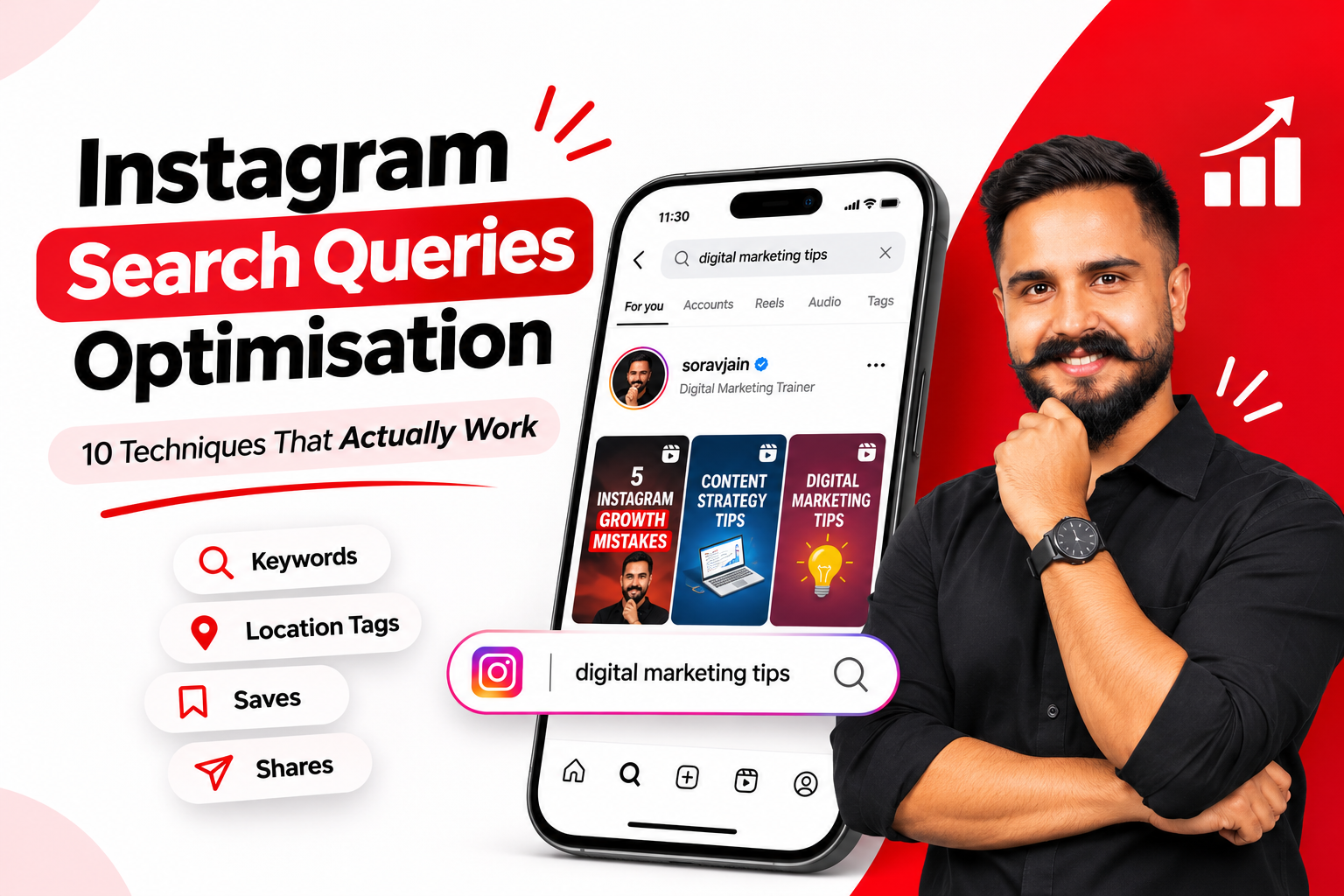
So let me walk you through Instagram search queries optimization the way I actually apply it, not the recycled tips you have probably already read. From optimizing your Instagram profile and captions to improving Reels discoverability, these techniques will help your content become more visible to people actively searching for your niche.
I remember the exact moment I stopped treating Instagram as just a place to post pretty pictures. A client of ours at echoVME wanted to know why a competitor with a smaller following was showing up every time someone typed a category keyword into the Instagram search bar, while our client, with a bigger and more loyal audience, was nowhere to be found.
That question sent me down a path I have been walking for a while now, and this blog is everything I have learned from it.
Instagram is not just a social feed anymore. It has quietly become a search engine that more than two billion people use every single day, typing things like best skincare routine, digital marketing tips, or curly hair salon near me directly into that search bar.
If your content is not built to answer those searches, you are invisible to a huge chunk of people who are actively looking for exactly what you offer. So let me walk you through Instagram search queries optimization the way I actually apply it, not the recycled tips you have probably already read.
For businesses looking to strengthen their online presence, understanding search visibility is equally important as building a strong digital marketing strategy. Enrolling in a digital marketing course can help marketers understand how different digital channels work togethe
Table of Contents
Instagram Search Queries Optimization: How Search Works
For years, creators assumed that hashtags alone decided whether their content got found. That assumption has not been true for a while. Instagram now studies user intent, the actual words someone types, the context behind that search, and matches it against your profile, your captions, and your content itself before deciding whether to show you.
What that means practically is this. Instagram is reading your content almost like a search engine reads a webpage. It is looking at relevance, and then it is watching what people do after they find you, whether they stay, save, share, or scroll past. That combination of relevance and behaviour is what decides your ranking, and understanding that shift is the whole foundation of this blog.
Technique 1: Use Keywords in Your Profile Name for Better Instagram Search Queries Optimization
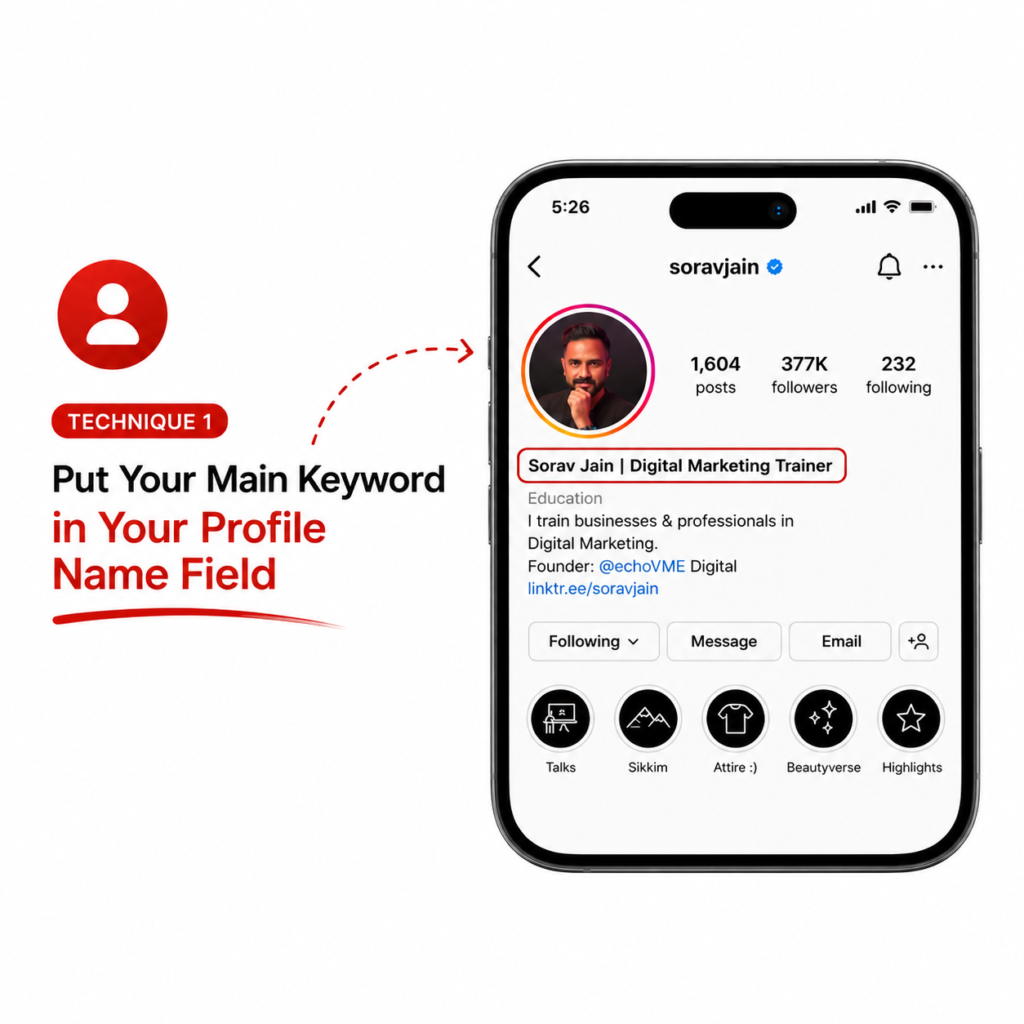
This is the single highest impact change most accounts have not made yet, and I tell every client this in our very first strategy call. Your profile name field, not your username, is one of the most heavily weighted pieces of text Instagram scans when matching you to a search query.
If you are a digital marketing trainer, do not just put your personal name there. Something like Sorav Jain, Digital Marketing Trainer works far harder for you than a name alone.
If you run a bakery in Chennai, your name field should reflect that category and location rather than just your brand name. This one small edit alone has moved the needle for several of our echoVME clients faster than almost anything else on this list.
Effective Instagram search queries optimization starts with making your profile information relevant to the exact terms your target audience uses
Technique 2: Write Your Bio Like You Are Answering a Search Query
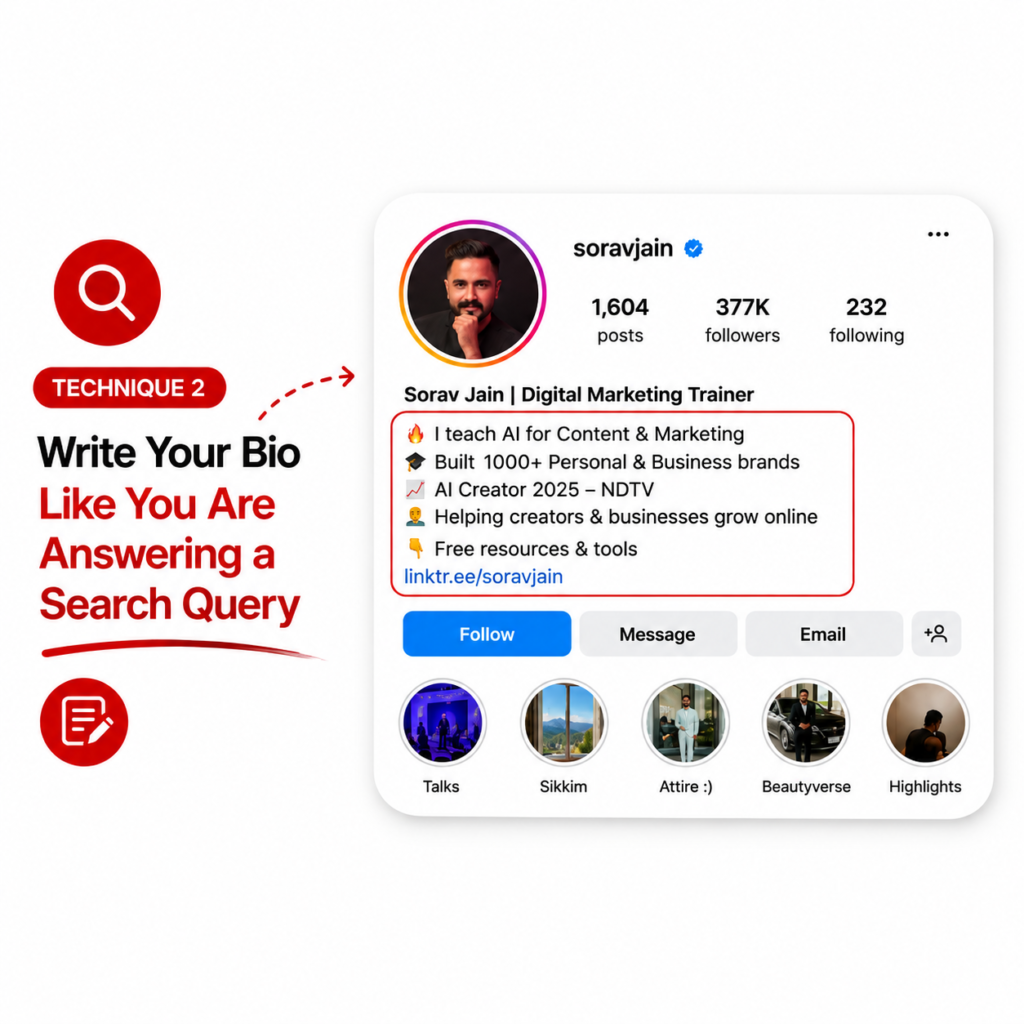
Your bio is prime real estate, and most people waste it on clever wordplay that means nothing to Instagram’s search system. I am not saying drop your personality, I am saying blend it with clarity. Mention what you do, who you help, and the core topic you are known for, in plain language.
Think about how someone would actually search for you. If nobody types your tagline into the search bar, that tagline is not doing SEO work for you, even if it sounds nice. Keep the personality, but make sure the actual words someone would search for are sitting somewhere in that bio.
Technique 3: Use Keywords Naturally in Captions for Instagram Search Queries Optimization
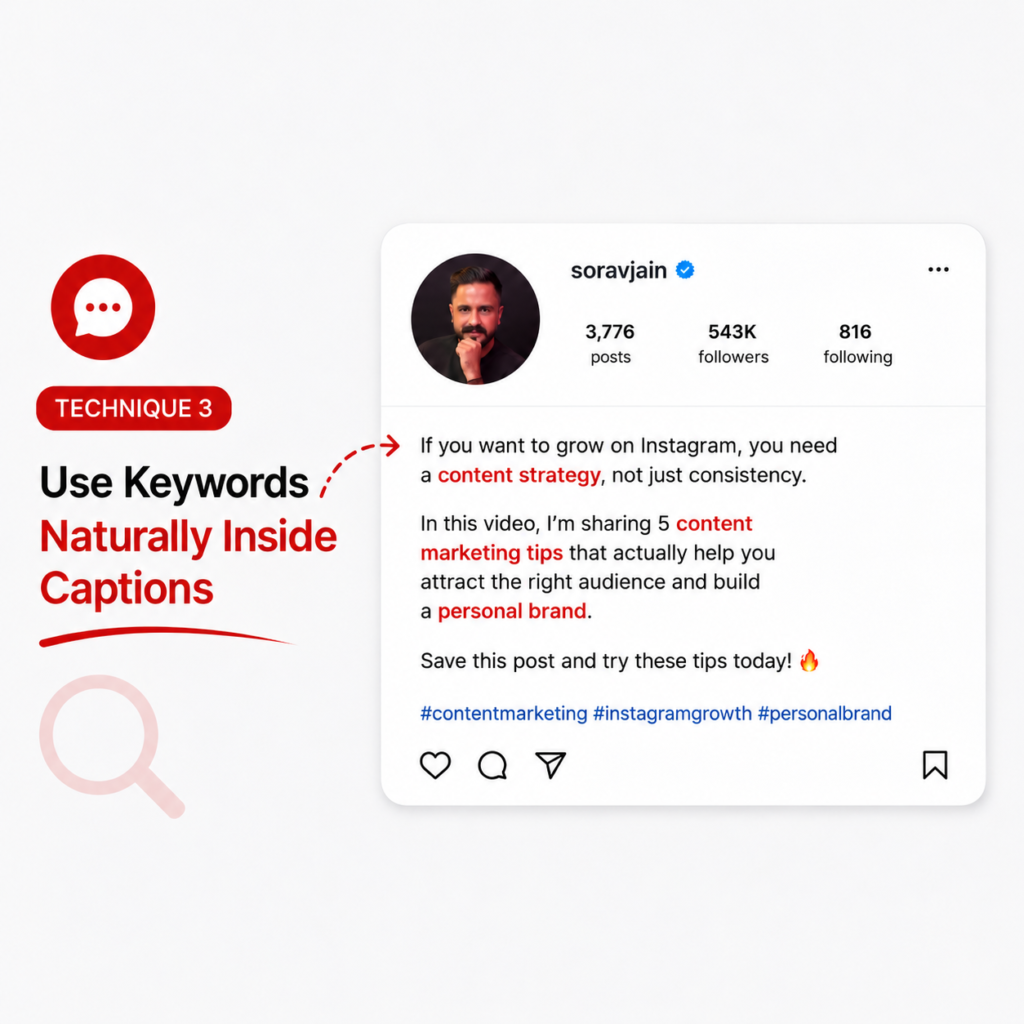
What I tell my team at echoVME is simple. Write your caption the way you would explain the post to a friend, and naturally include the phrase someone might search for. If your reel is about home workouts, do not force fit content marketing tips into it just because that phrase performs well elsewhere. Relevance beats popularity every single time in how Instagram search works actually ranks things.
Consistent keyword placement is an important part of Instagram search queries optimization because it helps the platform understand your content and match it with relevant searches. Following Instagram SEO best practices can also help improve your content’s discoverability.
Technique 4: Do Not Skip Alt Text
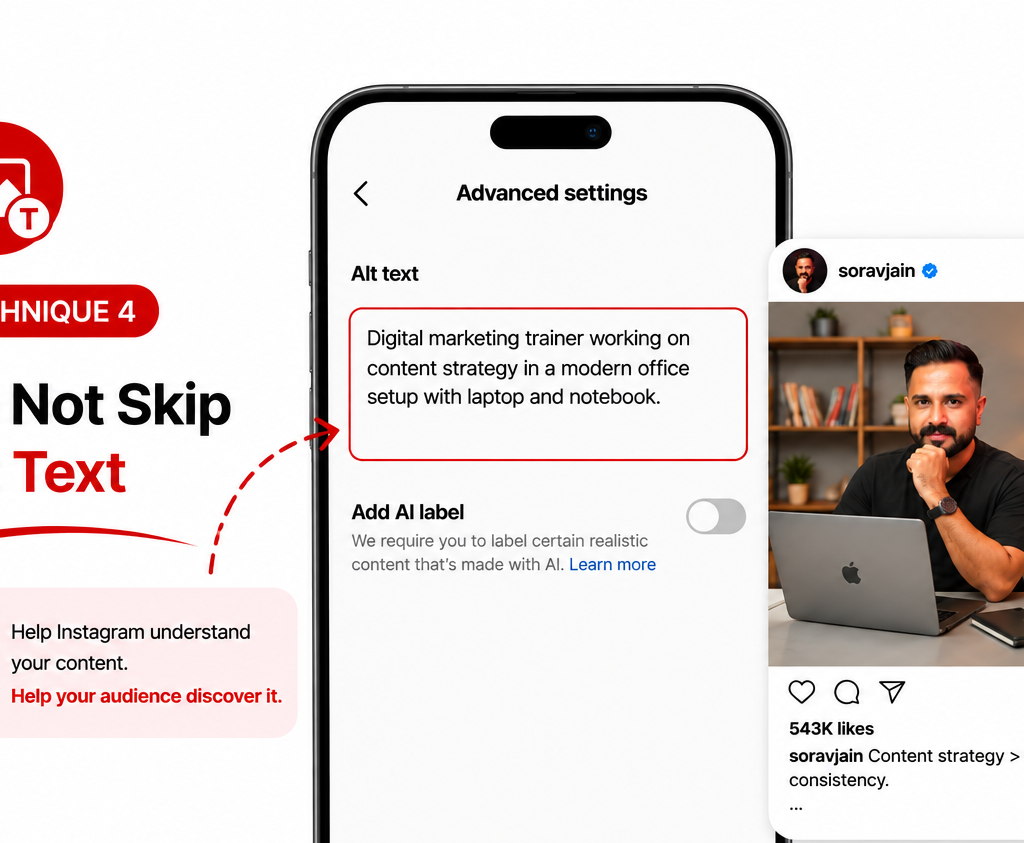
Alt text was originally built for accessibility, but Instagram also uses it to understand what an image or reel is actually about. Most creators never touch this setting, which means most creators are leaving free optimization on the table.
When you upload a post, go into the advanced settings and add a short, honest description of what is in the image, using the kind of language your audience would search for. It takes ten extra seconds and it genuinely helps the platform categorise your content correctly.
Technique 5: Open Reels With a Keyword Rich Title Card
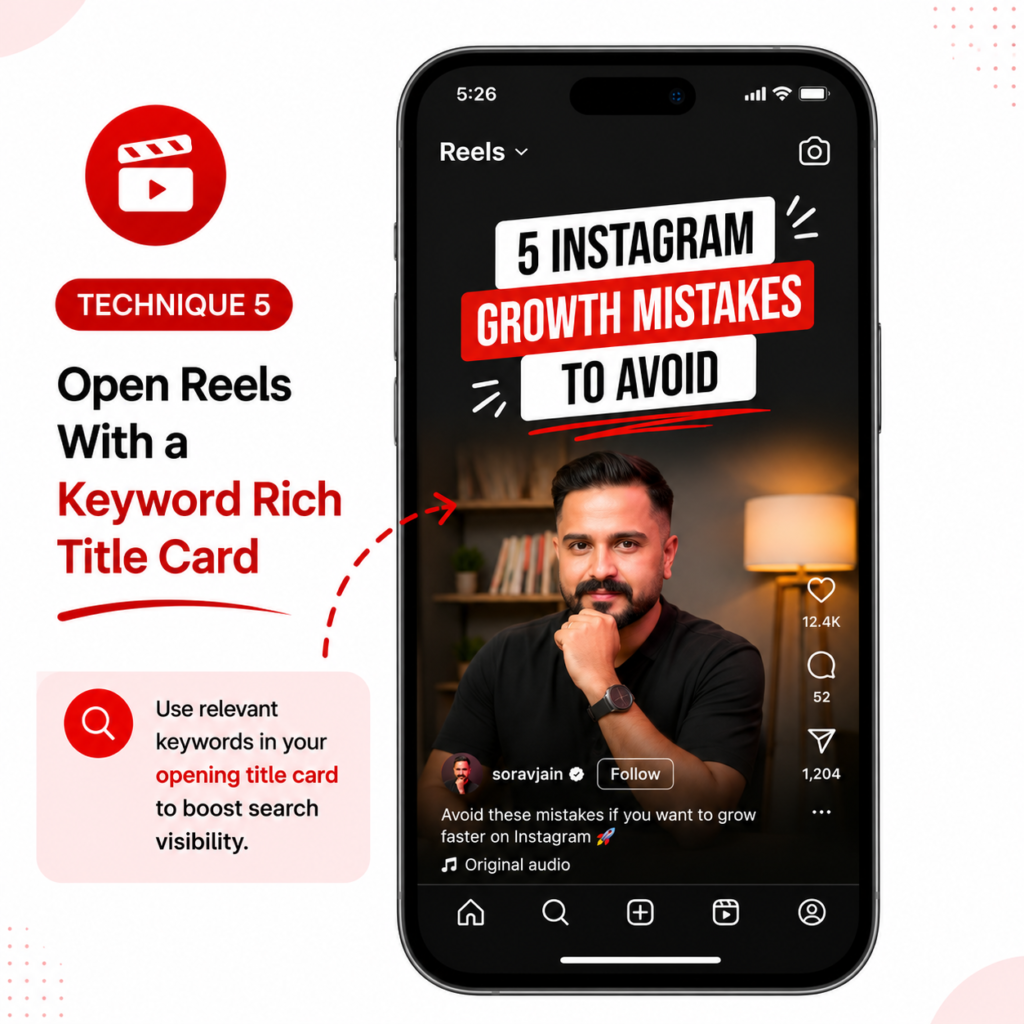
Reels carry a huge share of Instagram’s search visibility right now, and one small habit makes a real difference. Add a text overlay in the first couple of seconds that states clearly what the reel is about, using the same words someone might type into search.
Something like five Instagram growth mistakes to avoid does double duty. It hooks the viewer and it gives Instagram a clear text signal to match against search queries.
We started doing this consistently for BuzzFame campaigns and noticed reels with a clear opening title card were showing up in more search results compared to reels that opened with just a visual and no text at all.
Understanding the differences between content formats is equally important when planning your Instagram strategy. Read my guide on Instagram Reels vs Stories to understand how each format contributes to audience reach and engagement.
Technique 6: Add Location Tags Even If You Are Not a Local Business
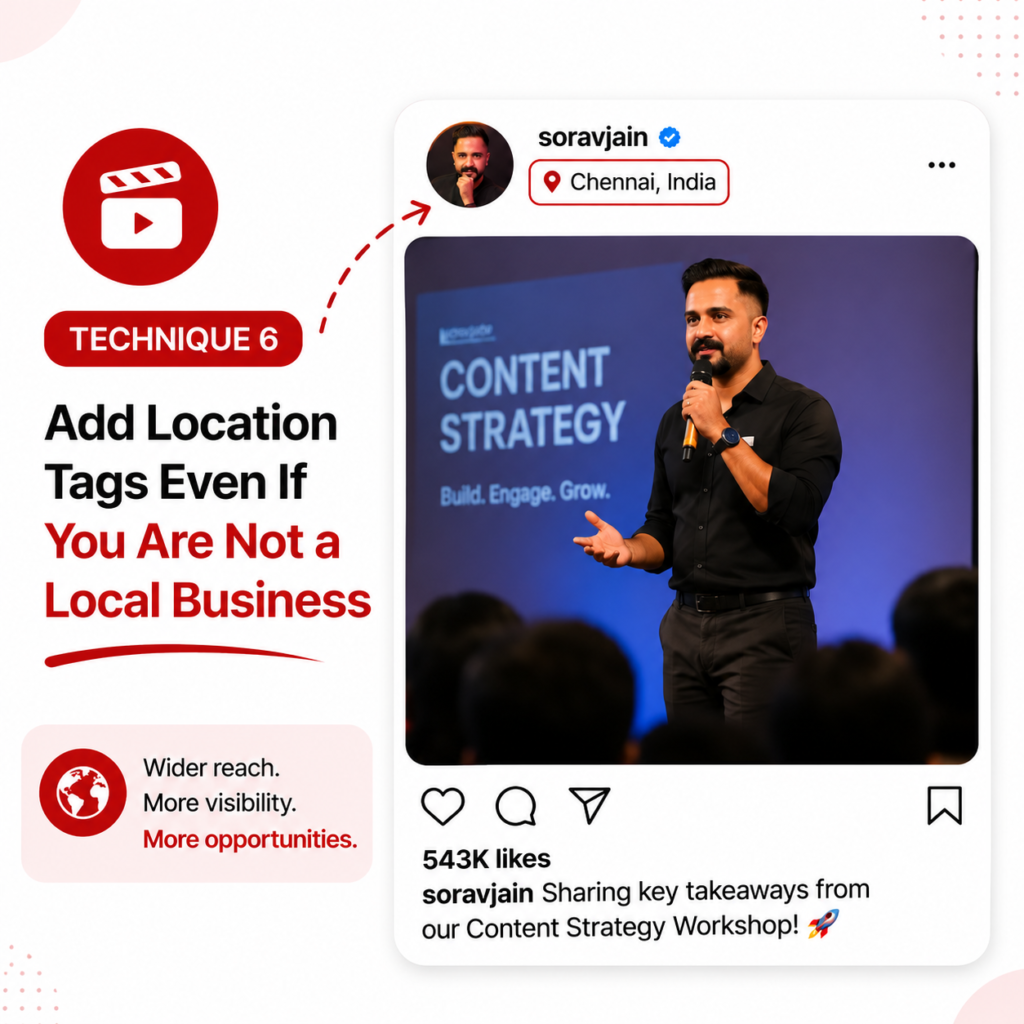
Location tagging is not just for restaurants and salons. If your content has any geographic relevance at all, tag it. A workshop you ran in Chennai, a talk you gave in Mumbai, or a client story from a specific city all deserve a location tag. It widens the pool of searches your content can appear in, especially for people who search with a location attached to their query.
Technique 7: Chase Saves and Shares, Not Likes
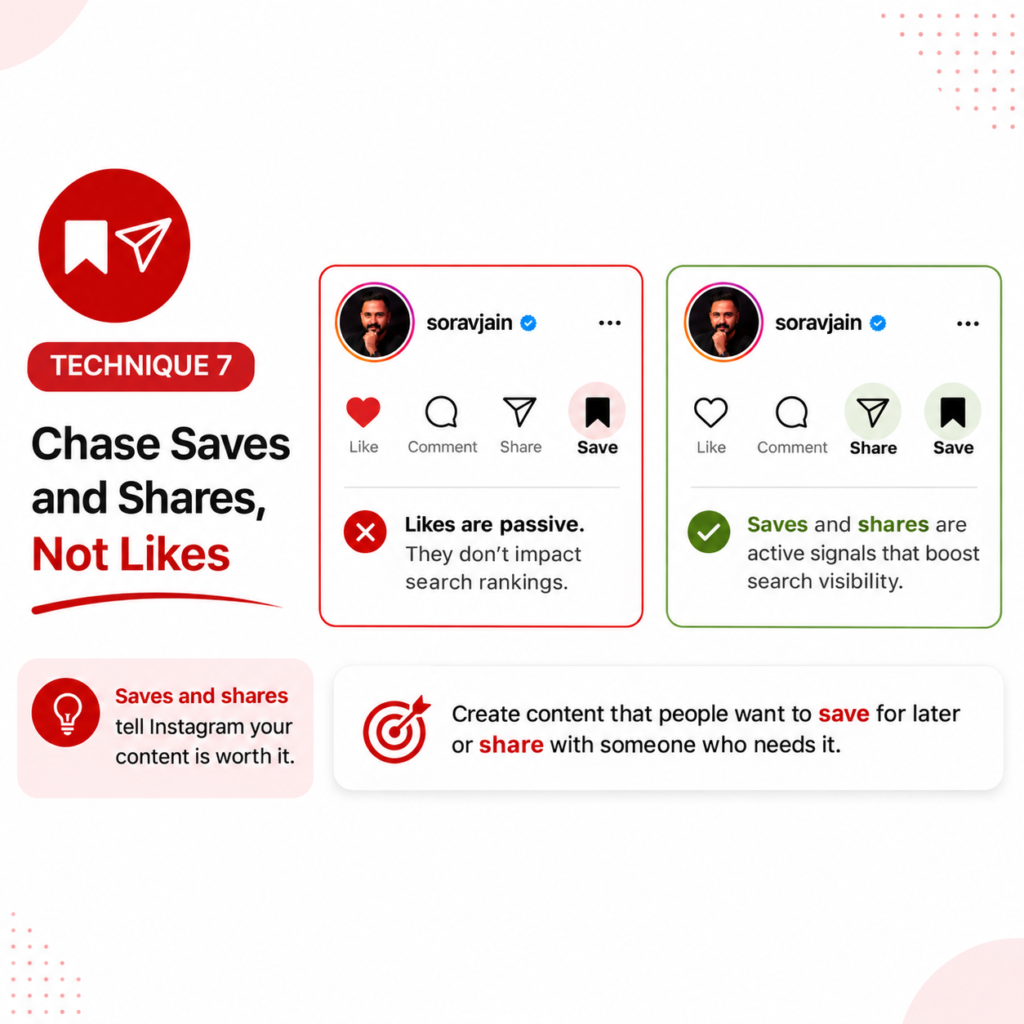
This changes how you should design content from the start. Instead of asking what will get likes, ask what will make someone tap save because they want to come back to it, or forward it to a friend because it solves a real problem. A carousel that breaks down a process step by step, or a reel that answers a specific question, tends to earn far more saves than a generic inspirational post ever will.
If growing your audience is one of your goals, explore these practical strategies on how to grow Instagram followers and build a more engaged Instagram community.
Technique 8: Stay Consistent Within a Clear Topic
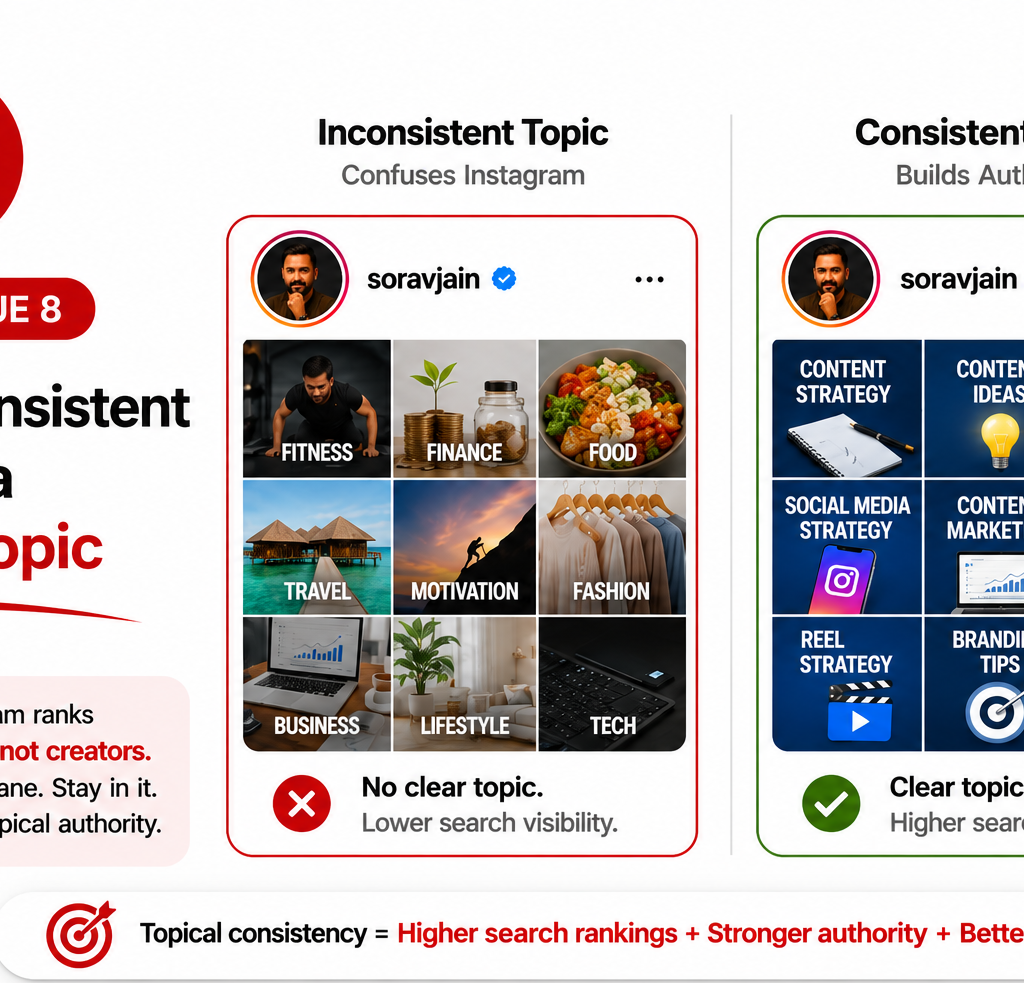
Here is something most creators get wrong. Instagram does not really rank creators, it ranks topics. If your content jumps from fitness to finance to food with no consistent thread, the platform struggles to understand what you are actually an authority on, and your search visibility suffers because of that confusion.
Pick a lane and stay in it long enough for Instagram to build confidence in your topical relevance. At Digital Scholar, we call this topical consistency, and it is one of the first things we correct when a student’s account is not showing up in relevant searches despite decent content quality.
Technique 9: Research Long-Tail Keywords for Instagram Search Queries Optimization
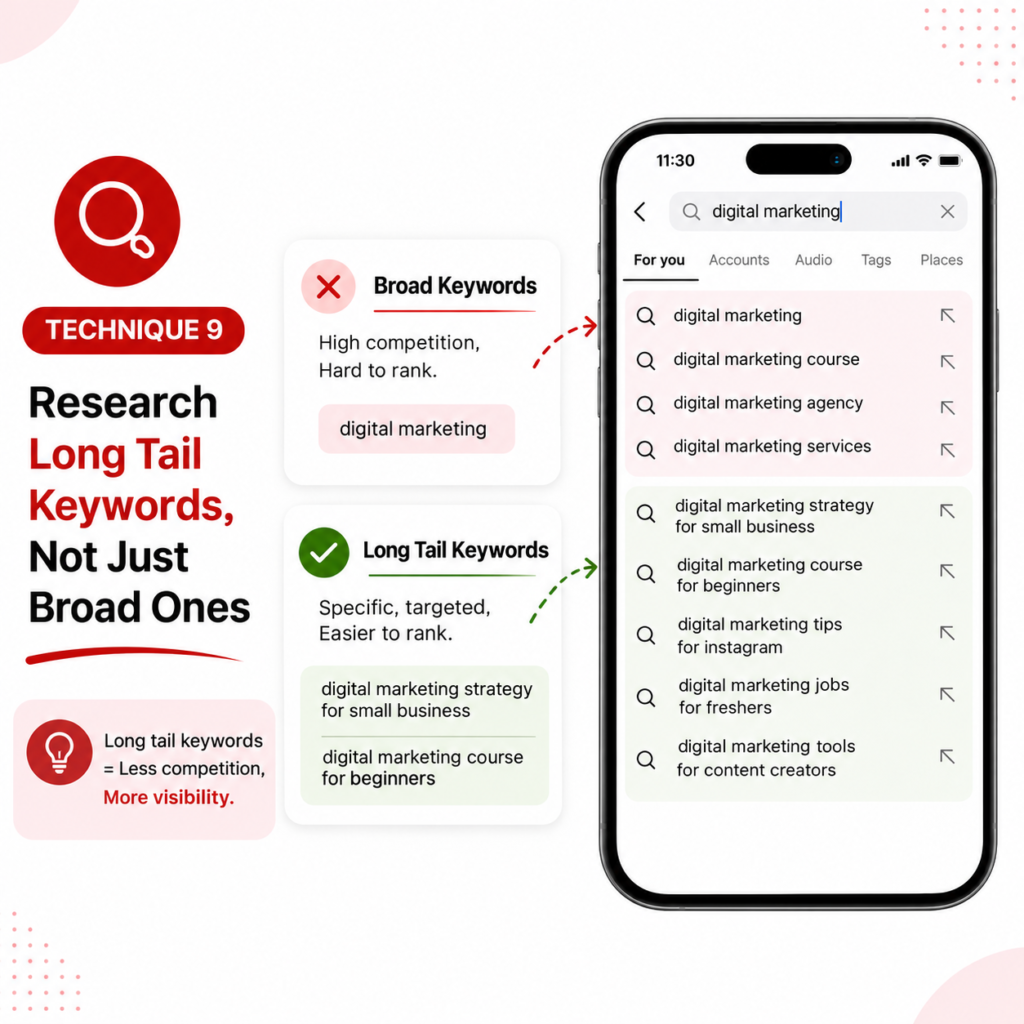
Broad terms like fitness or marketing are almost impossible to rank for because too many accounts are competing for that same phrase. Long tail phrases work much better. Something like home workout for beginners with no equipment or Instagram reel ideas for small bakery owners matches far more precisely with how people actually search.
A simple way to find these is to type a broad keyword into Instagram’s own search bar and look at the suggested completions. Those suggestions are essentially Instagram telling you exactly what real people are searching for in that category, and you can build content directly around them.
For more insights into search visibility, content strategy and digital marketing, explore the Sorav Jain digital marketing blog.
Technique 10: Understand the Google Indexing Shift
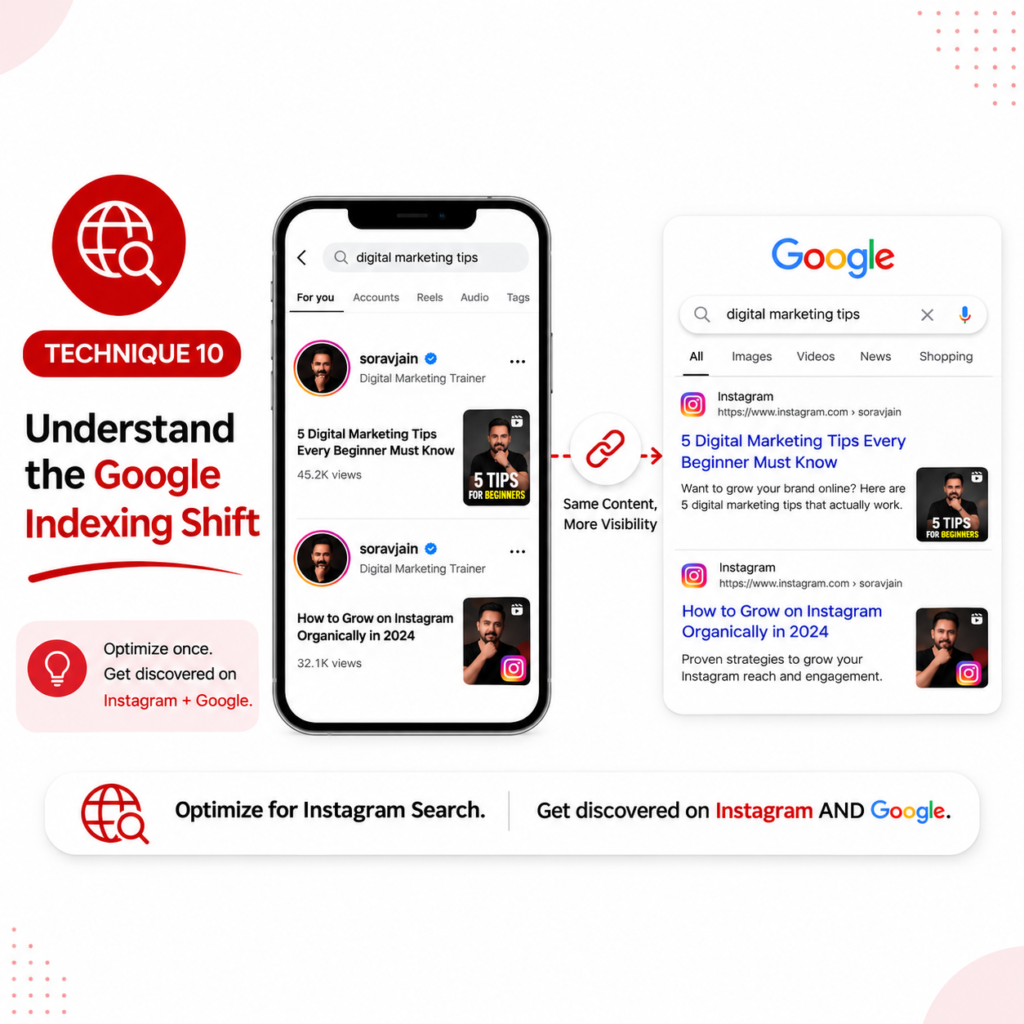
This creates a compounding effect. Someone searches on Instagram, finds you, and later that same content might surface again on Google when a completely different person searches there. Optimizing once now potentially works across two search engines instead of one, which is a bigger opportunity than most brands currently realise.
Mistakes I See Brands Make Again and Again
- Treating hashtags as the only SEO lever, when captions, bio, and alt text matter just as much
- Writing captions purely for humour with zero searchable keywords anywhere in them
- Posting across too many unrelated topics and confusing what the account is actually about
- Chasing likes with generic content instead of designing posts that earn saves and shares
- Ignoring their profile name field, which remains one of the easiest wins available
How I Apply This at echoVME and Digital Scholar
Every content calendar we build at echoVME Digital now starts with a simple question, what would someone type into Instagram search to find this exact piece of content. That single question changes captions, hooks, alt text, and even which topics we choose to cover in a given week.
Understanding these strategies is an important part of developing practical social media skills. Through Digital Scholar’s digital marketing course, aspiring marketers can learn how to plan, optimize and measure content performance across different platforms.
At Digital Scholar, I make my students track a few numbers weekly rather than obsessing over follower count. How much of their reach is coming from non followers, how many saves each post is earning, and how many profile visits are converting into follows. Those numbers tell you far more about your search visibility than a vanity like count ever will.
A Final Word From My Own Experience
Ultimately, Instagram search queries optimization works best when your profile, captions, content formats and audience engagement support the same topic.
After running a digital marketing agency since 2011, I have watched almost every platform shift from aesthetics towards intent and relevance, and Instagram is no different now. The creators and brands who treat this platform like a search engine, not just a broadcasting tool, are the ones who are going to compound their growth over the next few years while everyone else keeps chasing likes.
Start small. Fix your profile name field today, rewrite your bio this week, and pay attention to what you write in your next caption. These techniques are simple individually, but stacked together consistently, they genuinely change how discoverable your content becomes.
Frequently Asked Questions
1. What is Instagram search queries optimization?
It is the practice of structuring your profile, bio, captions, alt text, and content so Instagram’s search algorithm shows your account when people type relevant keywords into the Instagram search bar.
2. Does Instagram search still rely mainly on hashtags?
No. Hashtags still help, but Instagram now weighs caption language, bio keywords, alt text, and engagement quality far more heavily than hashtags alone when ranking search results.
3. What is the fastest change I can make today?
Add your main keyword to your profile name field, not just your username. It is one of the most heavily weighted, lowest effort changes most accounts have not made yet.
4. Do likes still matter for Instagram search ranking?
Likes carry far less weight now. Saves and DM shares matter much more, since they signal that your content was genuinely useful enough to revisit or send to someone.
5. Should I use broad keywords or long tail keywords?
Long tail keywords work better since broad terms face heavy competition. Specific phrases that match exactly how someone searches tend to rank easier and attract a more relevant audience.
6. Does alt text really make a difference?
Yes, alt text helps Instagram understand what your image or reel is actually about. Adding a short, honest description takes seconds and genuinely supports better categorisation and discoverability.
7. Can personal accounts rank in Instagram search?
Yes, personal accounts can appear in Instagram’s in-app search. However, only public posts from professional accounts are currently eligible to also appear in Google search results.
8. Why does posting about too many topics hurt visibility?
Instagram ranks topics more than individual creators. Jumping between unrelated subjects confuses the platform’s understanding of your expertise, which weakens your search relevance over time.
9. Do location tags help even for non local businesses?
Yes, tagging a relevant location, like a city where you hosted an event, widens the pool of location based searches your content can appear in, even beyond local businesses.
10. Is Instagram search optimization a one time task?
No, it is ongoing. Consistency in topic, regular use of relevant keywords, and content that earns saves and shares over time is what builds lasting search visibility.
